Matènwa Community School

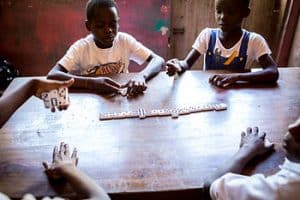
Children and teachers engage in hands-on education, critical thinking, and mutual respect.

Institute for Learning

Teacher training for schools seeking to find a more effective way to teach.

Mother Tongue Books

Empowering children to become literate by reading and writing in their native language.

Women’s Leadership Fund

Seven Matènwa graduates are now continuing their university education—fully supported for the year—thanks to this community.

Creole Gardens

Students cultivate organic produce, practice environmental stewardship.

Summer Camp

Inspiring meaningful exchanges that strengthen community ties and inspire collaborative learning.

Art Matènwa

Nurturing creative expression by supporting women artisans.

Community Outreach

Help students and families care for elders and build lasting food security.

College Scholarships

Matènwa grads who've earned full-tuition scholarships need your help to cover costs like housing, meals, books, and more.

Support Matènwa programs

The Story of the Matènwa Community Learning Center

Feb 1, 2023

Global Center for the Development of the Whole Child.

How do you build a school? For Chris Low, it started with a simple pencil.

Chris Low used to teach at a bilingual school —Haitian Creole and English— in the Cambridge Public School Department (CPSD). Given the school’s direct connection to Haitian culture and history, she always sought out opportunities to learn more about the country. However, the more she learned about Haiti, the more she could not understand why there was so much poverty and desired a way to make a difference in this community that she loved. It wasn’t until she visited the Island of Lagonav, Haiti and began to engage in an adult literacy program (run by a community association, AAPLAG, and funded by Beyond Borders) that she started to understand more about the roots of poverty in Haiti. What she saw astounded her. She saw adults working to achieve literacy in their mother tongue, Haitian Creole, a direct result of the remnants of a colonial past that made French the official language of instruction in schools despite most students and teachers having little to no fluency in the language. Haiti’s colonial past continues to contribute to a fragile education system that leaves students floundering in classrooms where they are taught in a language they frequently do not understand.

Struck by the reality of Haitian schools and their impact on the life trajectory of their students, Chris considered what she could do. She took a one year leave of absence…

Click here to see the full article on Global Center for the Development of the Whole Child.

More Stories

Water

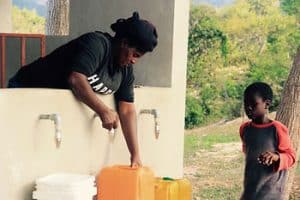
The average American uses 17 gallons of water per shower. We also use gallons of water to wash our faces, teeth, dishes, clothes, dogs, and […]...

Hurricane Matthew's Damage Assessment

Hurricane Matthew is old news for some, but not for the people who were hit by it. For those of you interested in the damage […]...

Happy Mother's Day

Today, we honor mothers around the world for selfless dedication to nurturing, raising, and supporting without condition. Your commitment to the work that we do […]...