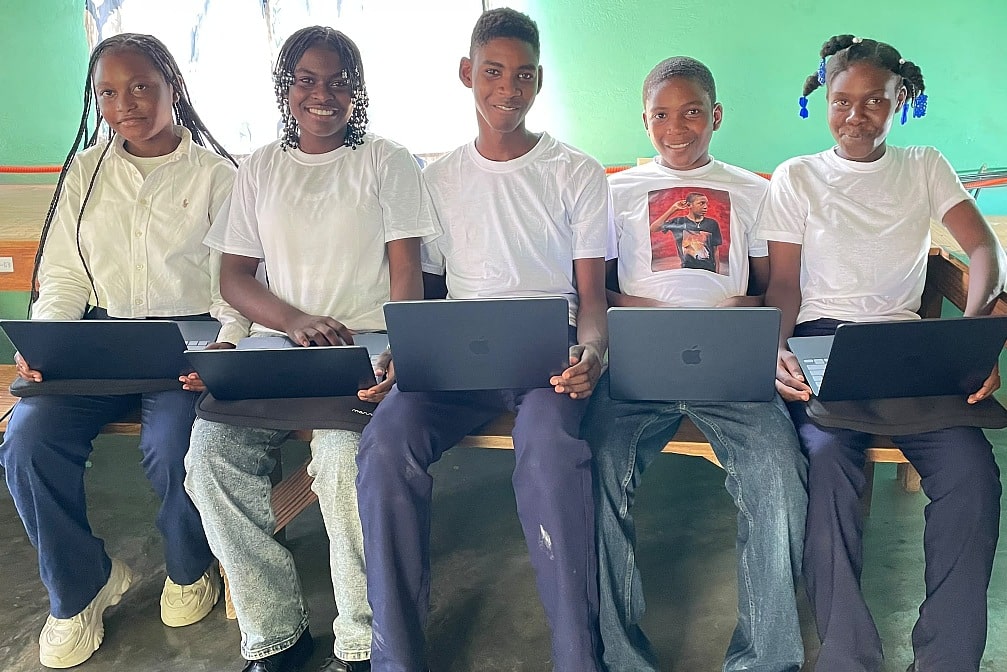
At Matènwa, students are learning Scratch and web programming in the language they know best—thanks to an ongoing collaboration between computer instructor Bityòs Sauveur and longtime Friends of Matènwa supporter Jim Verhulst.
For years, Matènwa has believed that children learn best when they can begin in their mother tongue.
That belief doesn’t stop at reading, math, or science. It extends into the computer lab too.
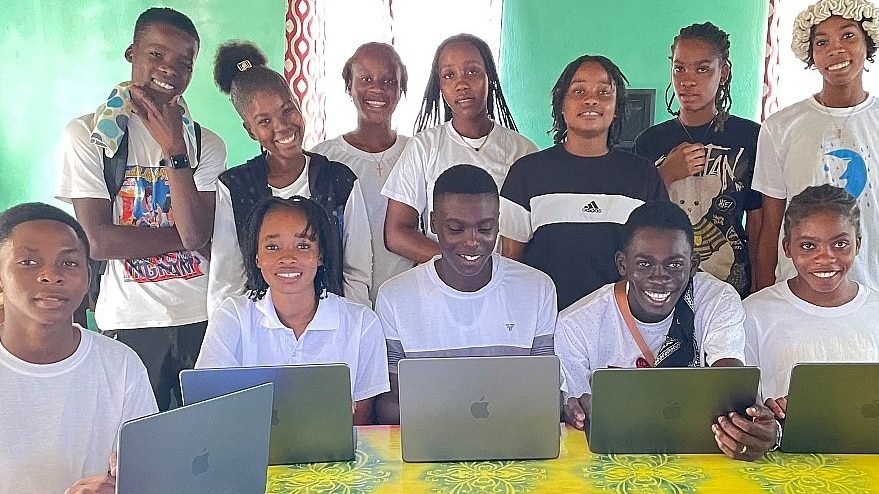
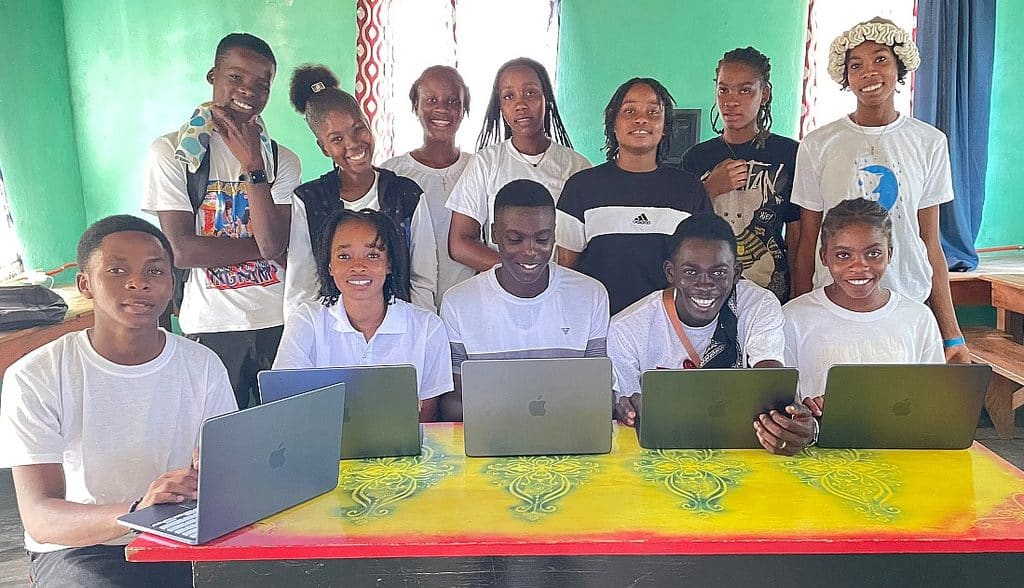
MCLC students are learning Scratch and the foundations of computer programming in Haitian Creole, guided by computer instructor Bityòs Sauveur. Earlier this year, Bityòs shared examples of Scratch exercises his sixth-grade students were using to help newer students get started.
And behind the scenes, another kind of learning has been taking place.
Building the tools together
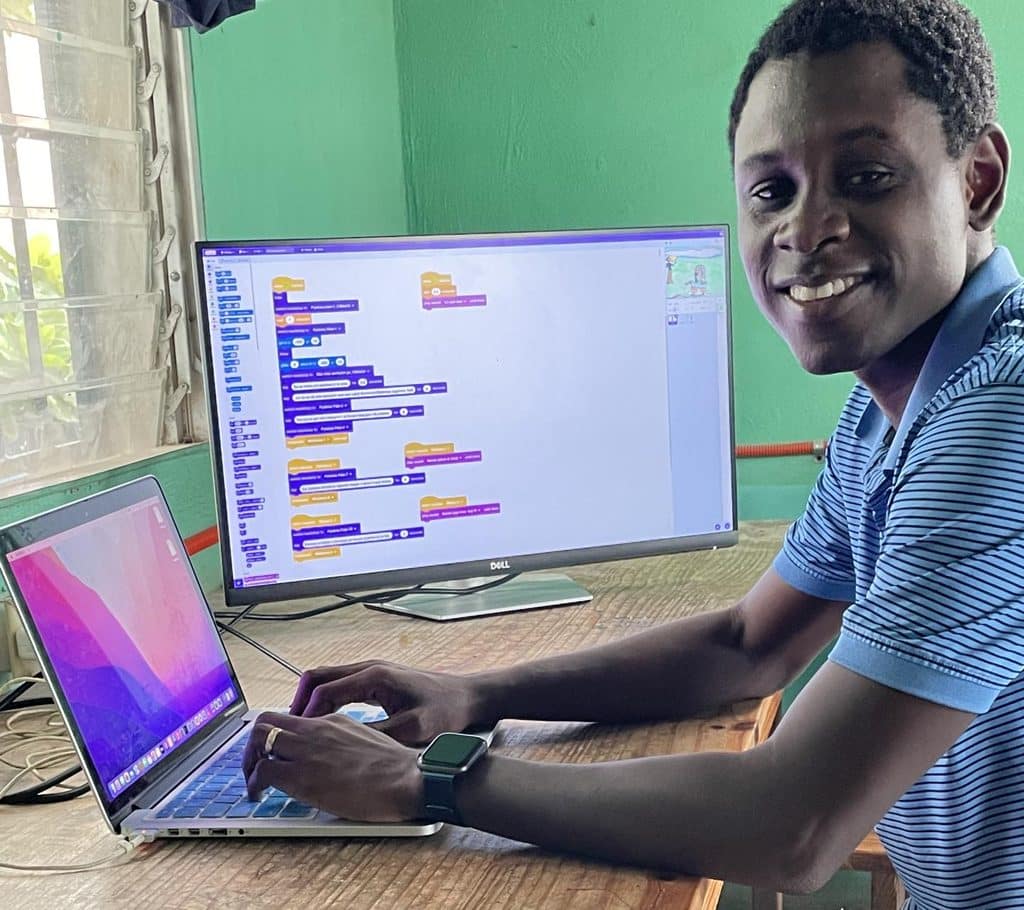
For months, Bityòs has been working closely with longtime Friends of Matènwa supporter Jim Verhulst to develop and test programming tools designed for students learning in Haitian Creole.
The collaboration is truly a two-way one.
Jim develops the software. Bityòs tests it, helps determine which Kreyòl terms will make sense to students, and brings his experience of actually teaching computer skills in Matènwa’s classrooms.
When Jim was developing an early Kreyòl version of the program, he specifically asked Bityòs to help choose programming terminology students would understand rather than relying solely on automated translations.
That back-and-forth has continued as the project has grown.
From Scratch to Kreyòl web development
The newest version of the project is called Kreyol Web Development.
It includes code editors, a help function, and a feature called Live Preview, which lets students immediately see the results when they make changes to their code. Jim described the idea as similar to the exploratory learning students experience with Scratch: change something, see what happens, and keep experimenting.
Jim has also been developing ways for the software to catch and explain common programming errors students may make.
That became very practical recently when Bityòs sent Jim a file that wasn’t working. Jim identified two small syntax errors—and then added what he learned from them to the set of examples he is using to improve the program’s error messages for students.
In other words, the tool is developing through the same process we hope students experience: try something, discover what doesn’t work, learn from it, and try again.
Technology without leaving language behind
What makes this work especially meaningful to us is not simply that Matènwa students are learning to code.
It is that they are being invited into technology without first being asked to leave their own language behind.
Bityòs understands the students and the classroom. Jim brings years of technical knowledge. Together, they are figuring out how programming education can work in the particular context of Matènwa rather than simply importing something designed for another kind of school.
Jim himself has emphasized that approaches built around one-computer-per-student classrooms may not fit Matènwa, and that Bityòs is the one best positioned to determine how the tools should actually be used with his students.
That spirit of collaboration matters.
At Matènwa, we believe children shouldn’t have to leave their mother tongue behind in order to discover what they are capable of learning.
Sometimes, that discovery begins with a book. Sometimes it begins with a pencil. And sometimes it begins with a line of code.
Looking beyond Matènwa
Jim and Bityòs are still developing and testing the tools, but the hope is larger than one computer lab.
Jim has written about wanting the work created with Matènwa to be useful more widely in Haiti, including both the Kreyòl programming tools and Scratch projects.
For now, though, the most important thing is happening right here: Matènwa students are getting the opportunity to explore technology, solve problems, create things, and learn in the language they understand best.