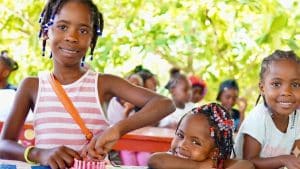
Zaza and her youngest son Kwa enjoying soup joumou in Matènwa.
For Haitians in Haiti and abroad, January 1st is about more than ringing in the New Year. It's a celebration of their country's independence, and a squash-based soup called soup joumou is a symbol of that freedom.
January 1, 1804, marked the culmination of this a successful, decade-long slave rebellion against French colonial rule, establishing Haiti as the world's first black republic. Two-hundred-and-fifteen years later, soup joumou remains a symbol of that triumph. Prior to this victory, African slaves were expected to prepare the soup for slave owners, but they were forbidden from tasting it. That changed once the slaves overthrew the French and Haiti declared itself an independent nation. So, every January 1, Haitians prepare and eat soup joumou to commemorate Haiti's independence.
Haitians are so proud of their culture and their independence. The soup should remind us of what our heroes did for us. Pepito Laventure, the finance coordinator at Friends of Matènwa, worries about the mainstreaming of the holiday. He wants Haitians to never forget its significance. “The pleasure of eating a tasty soup joumou as a cultural food habit [should never be] bigger than the remembrance of Haitian Independence Day.”
The kabocha squash is the star of the dish. The list of the other ingredients vary but often includes broth, beef, potatoes, peppers, cabbage, leeks, celery, malanga, carrots, turnips, onions, thyme, parsley, garlic and a bit of pasta. A small amount of lime is added just before serving.The key to eating it is feeling proud of the freedom it symbolizes.
The soup brings the Haitian community together. Friends and relatives visit each other’s homes. Many Households produce enough soup joumou to give to anyone who comes to visit.
Soup joumou is a beloved Haitian tradition. It is a legacy that reminds Haitians why they are free. No matter where Haitians are on January 1st they partake in soup joumou to celebrate their country’s independence and their own freedom.