This week, tenth-graders in Matènwa have started to learn a new subject! In our secondary-school teacher meeting last Saturday, we discussed a scheduling problem that had led to our tenth-grade class having a two-hour block on Fridays with no teacher. Some of the other teachers asked me if I would consider teaching a geography class during part of that time, since I had led a map-skills teacher training in the fall that many teachers really enjoyed.
I accepted, and we had our first class today. Tenth grade is a wonderful group of 13 students. I've often worked with them together with Cenel, the English teacher, but today was the first time I have worked with the class by myself, and they were really excited about learning and asking questions. Since this class isn't part of the Haitian national curriculum, we are free to explore what the students are most interested in, and answer as many of their questions as we can.
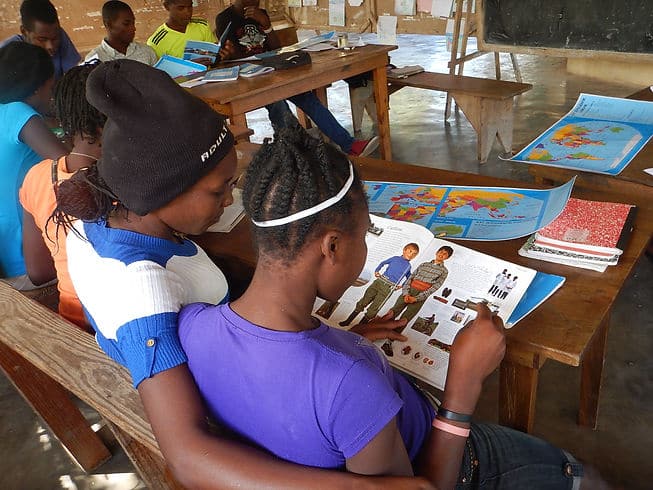
We began today's class by talking about what geography is. The students have done geography before as part of social studies classes, but many of them thought of it as having more to do with physical land forms than with people. Before class, I had found a definition of geography online from the National Geographic Society and translated it into Kreyòl. We used this definition to discuss the way geography deals not only with land, but with the people and societies who live on that land, and with the relationship between the land and the people.
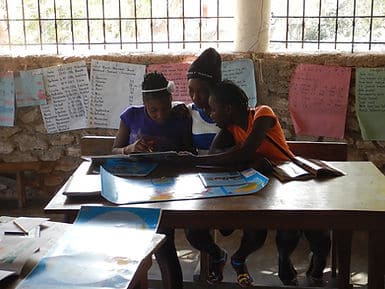
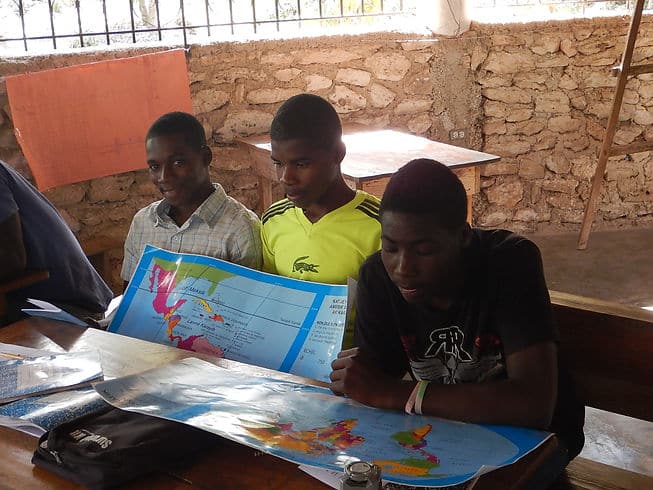
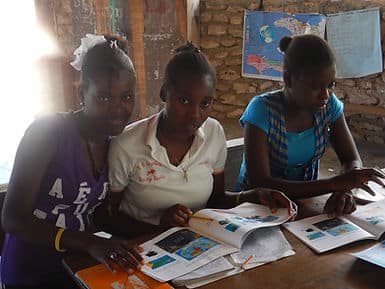
We talked a little about maps and globes, and then I gave the students about half an hour to explore some of the geography materials LKM has: an inflatable globe, maps of the world and the Caribbean in Kreyòl, and geography books in Kreyòl, French, and English.

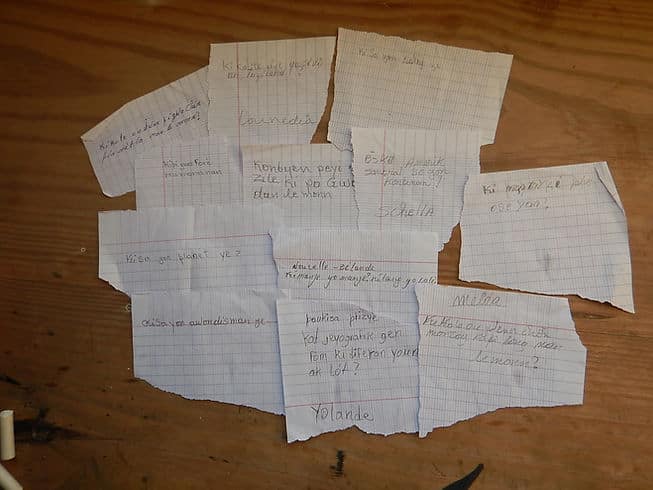
At the end of the class, we came together again, and I asked students to share their questions. I had each student write a question on a piece of paper, and some students asked other questions as well. Here are some of the questions I got:
-How do we know that the earth is round?
-Why can't we feel the earth turning?
-Why does the sun not set at all at the North and South Poles during certain seasons?
-What gods do people worship in Thailand?
-What is the largest forest in the world?
-Why do many maps have different shapes from each other?
-What foods do people eat in New Zealand? What language do they speak?
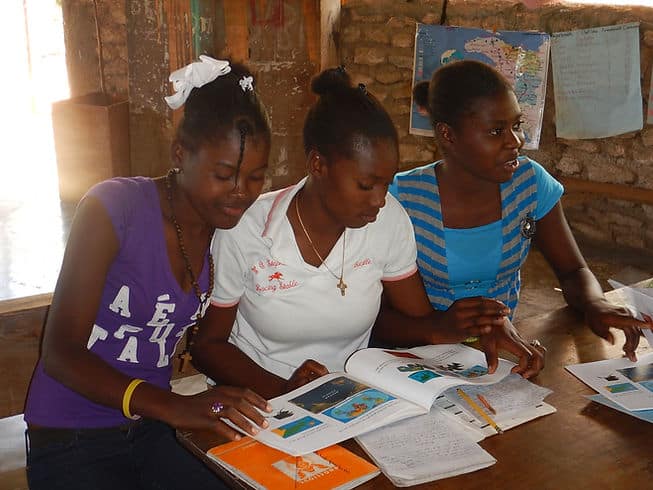
I'm thrilled with the curiosity of these students, and I'm excited to explore geography with them over the coming weeks and months.